.svg)
.svg)
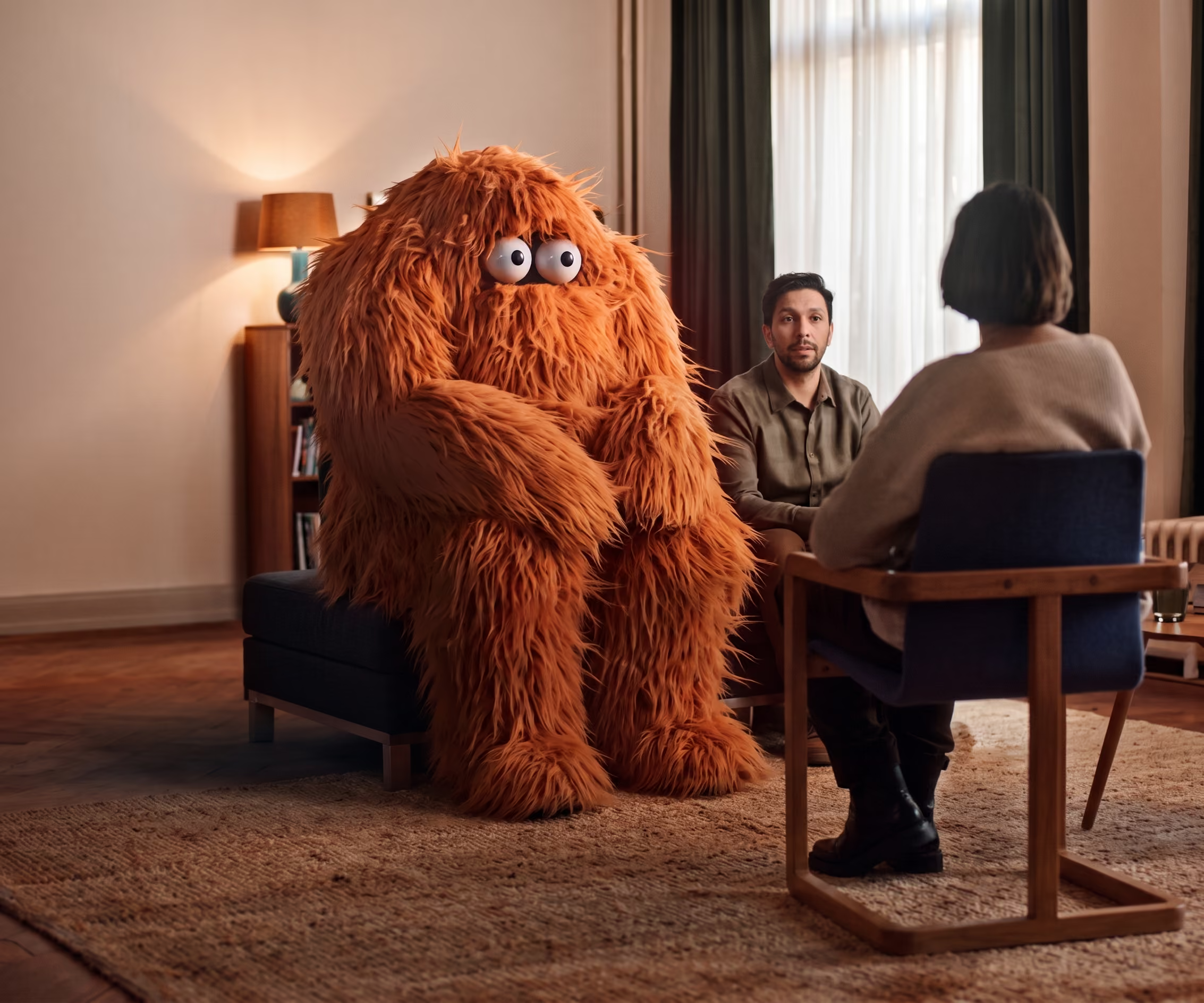
How do you raise awareness about mental health and improve access to care in a country where stigma remains a significant barrier? INAMI's mental healthcare campaign tackled this issue head on, aiming to break taboos, inform the public, and guide individuals towards accessible care options.
The campaign targeted two vulnerable groups: youth up to 23 years old, and people aged 65 and over, who often face difficulties accessing psychological care. Running in two waves across Belgium, it used a diverse media mix including radio, outdoor advertising, posters and social media to secure broad visibility.
The initiative was supported by survey data on mental health behaviour, collected by INAMI and the Prime Minister's Chancellery, which helped refine the messaging and connect better with the target audiences.
INAMI set out to make mental health a priority and encourage people to seek the psychological support they need. The campaign was structured around the SEE THINK DO framework:
- SEE: raise awareness of common mental health issues such as stress and anxiety, tracked through reach, CPM, CPV and website traffic.
- THINK: encourage reflection on mental wellbeing, measured through CPC, CTR, engagement and site visits.
- DO: inspire practical action, with success measured through engagement and website interactions.
The difficulty was not reach alone. Two audiences at opposite ends of the age range needed different channels, different tones, and a sequence that moved people from exposure to a concrete step.
blue2purple implemented a two phase strategy to build awareness and encourage action.
Wave 1, March to April: maximising reach and engagement
- A robust national presence through Belgian radio and online audio ads.
- DOOH, display and YouTube ads added visual impact.
- Facebook and Instagram ads maintained continuous interaction across Meta platforms.
- A Google search campaign targeted users already familiar with the ads and drove them to the campaign website.
Wave 2, May to June: reinforcing the first phase on younger audiences
- Snapchat replaced radio to connect better with younger demographics.
- Social media engagement was sustained, with community management ensuring continuous interaction.
- An always on approach kept visibility high across all platforms.
Key tactical elements
- Comprehensive media mix: radio, online audio, DOOH, display, YouTube and OLV, to secure maximum reach across demographics.
- Targeted messaging: radio spots were integrated into the DOOH campaign, so audiences were exposed both on the road and at home.
- DOOH retargeting: using Adsquare, we retargeted individuals who passed by DOOH screens, increasing frequency and engagement through mobile.
- Optimised Google Ads: in the second wave, search terms were refined on wave one insights, which increased website traffic and helped INAMI identify the regions with the greatest demand for mental healthcare services.
This campaign was the result of the collaboration between blue2purple (media buying for radio and digital platforms), MKKKM Social media experts (Meta media buying and community management and Great (development of the creative assets, tailored to each audience group).
The campaign exceeded expectations across all channels.
Ad recall. A 5 percent increase in ad recall in the second wave, and a 36 percent improvement compared with other radio campaigns.
Engagement. In Southern Belgium, people who heard the radio ad were twice as likely to consult a psychologist, and website visits tripled.
Google campaign. Clicks to the website surged by 56 percent, driven by optimisations in the search strategy. The campaign also helped INAMI identify the areas with the highest demand for mental healthcare.
YouTube. Impressions were 8x higher than forecast, with a significant reduction in CPM and a 10x increase in clicks.
DOOH and display. The retargeting strategy delivered 8 percent more impressions, with 22 percent more clicks in the display campaign.
Overall the campaign broke down barriers around mental health discussions and drove action across every channel.











.svg)
.svg)