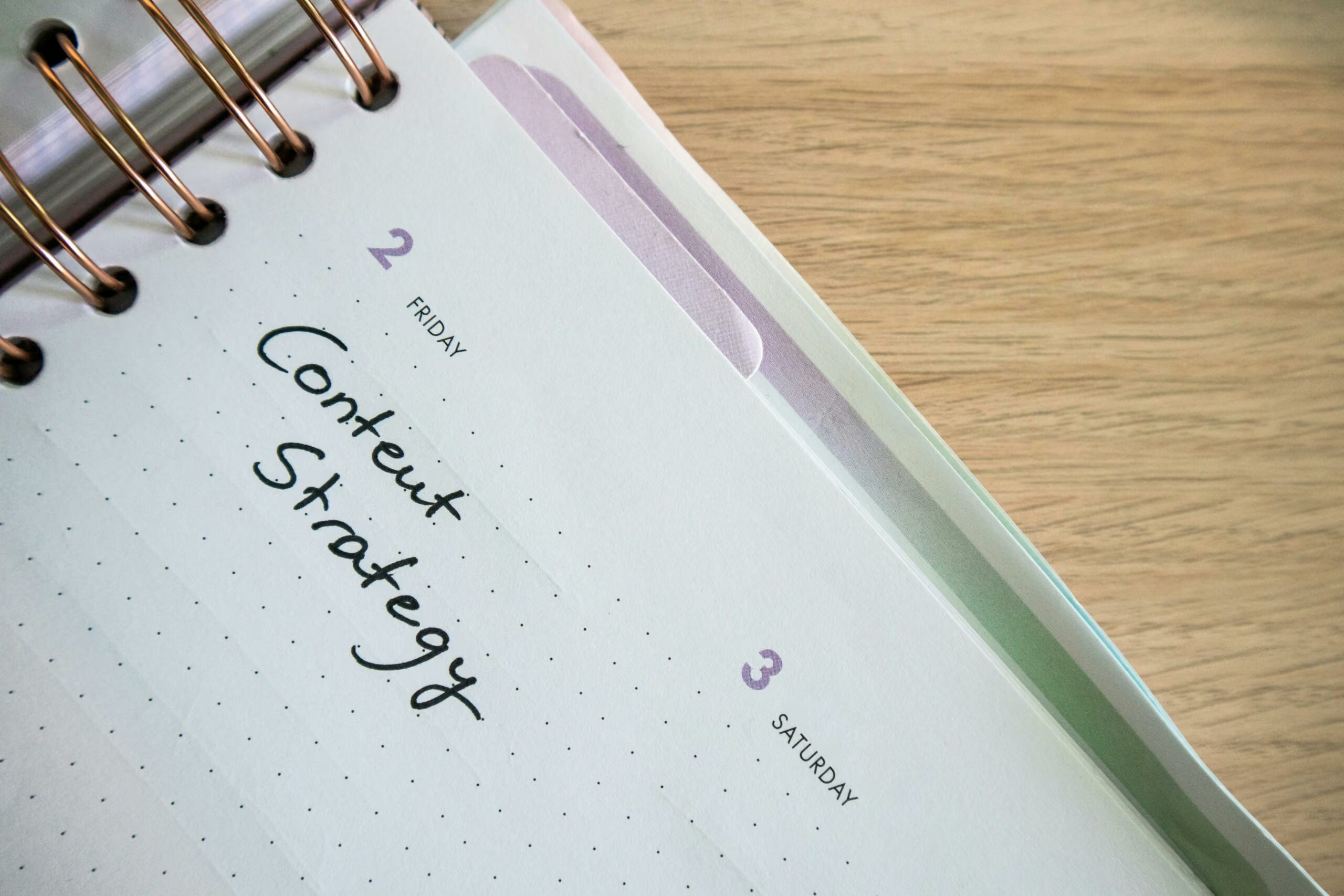
Why a solid communication strategy and content strategy are essential in 2025
Today everyone is on Instagram, LinkedIn and other platforms like TikTok. But having an account does not mean having a social media strategy. Too many brands open accounts on different channels and publish because they "have to be present", without asking whether that feeds their main digital communication objective.
The result: a lot of energy spent, teams spreading themselves thin, content that does not really reach users, and posts with no value.
A good strategy does the opposite. It structures your presence, adapts your messages and builds a coherent digital presence that can turn social into a real business lever.
At blue2purple, an agency specialised in communication and digital marketing strategies, we work with the professionals who want to step out of that logic.
Here is our expert guide to building a coherent social media strategy, adapted to 2025.
Choosing your channels to distribute content: be where it counts, not everywhere
One of the most common mistakes is to multiply accounts, then leave them inactive. Each channel has to be connected to clear uses and to the right communities.
Which channels to prioritise in 2025?
TikTok: immersion, short storytelling, fast format testing.
Instagram: brand building, the Instagram carousel and UGC to reinforce credibility.
LinkedIn: B2B visibility, blog articles, a podcast episode or a newsletter to build a relationship with professionals.
YouTube: long videos, expertise, organic search and presence in search algorithms.
What we recommend
Resist the temptation to be everywhere.
Better to structure two platforms that are fed and coherent than to have five that are half empty. Choosing your social media channels plays a strategic role: it shows which platform matters to reach your audience more efficiently.
Defining your audience: a coherent content strategy to engage the right communities
Saying "our target is everyone" is a mistake. Audiences are built on behaviours, cultural codes and precise expectations.
On TikTok, users expect immersive and authentic content.
On Instagram, communities consume visual and aspirational content.
On LinkedIn, professionals want concrete insights, often embedded in blog articles or posts about trends.
What we recommend
Map your audiences by social platform, test, and analyse the feedback.
Every time you speak, it has to be coherent with a well designed editorial calendar aligned on your objectives.
Frequency and rhythm of content: adapting your strategy to platforms and audience
Posting too much means saturation. Posting too little means invisibility.
TikTok: test fast, accept failure as feedback, iterate.
Instagram: visual coherence, carousel and stories.
LinkedIn: posts on key moments, newsletter or podcast episode.
X: reactivity and live trends.
What we recommend
Build a realistic and sustainable rhythm.
Rigorous planning through an editorial calendar keeps the balance between regularity and relevance.
Optimising your content per platform: adapting your editorial strategy to trends and communities
Recycling a LinkedIn post on TikTok is a mistake. Each network has its own codes.
TikTok: spontaneity, trends revisited.
Instagram: the Instagram carousel, crafted visual formats.
LinkedIn: blog articles, podcast episodes, newsletter.
YouTube: expertise through long videos.
What we recommend to optimise your content
Start from a central message, then adapt it into content creation designed for each platform.
Collaborate with your audiences: UGC is more credible content and aligns better with expectations.
Measuring what really counts: the highlights that turn your social channels into a real lever
Limiting yourself to views and likes is a mistake. The real metrics are:
The incremental traffic generated.
The conversions: add to cart, sales, sign ups.
The reuse of UGC.
The increased credibility of the brand.
What we recommend
Connect your social media KPIs to your business objectives.
Optimising your actions is not about stacking impressions, it is about building communication that can turn your social channels into measurable commercial levers.
Conclusion
A good social media strategy is not about publishing often, nor about being everywhere. It is about choosing the relevant channels, defining your audience and your objectives, creating content adapted to the formats of each platform, respecting a clear editorial charter, and tracking the KPIs connected to your business objectives.
The brands that succeed in 2025 are the ones that build an authentic relationship with their communities, turning a coherent digital presence into tangible results through a communication strategy and a content strategy that were actually thought through.
.png)


.svg)
.svg)